
NEWS
10 Steps to Implement a Transport Management System for Optimized Logistics Operations
NEWS
10 Steps to Implement a Transport Management System for Optimized Logistics Operations

12.24.2025
In today’s fast-paced logistics industry, operational efficiency is no longer optional. By 2026, companies that fail to streamline workflows and integrate digital tools risk falling behind. A Transport Management System (TMS) can become the backbone of modern logistics, enabling better coordination between shippers, freight forwarders, and carriers.
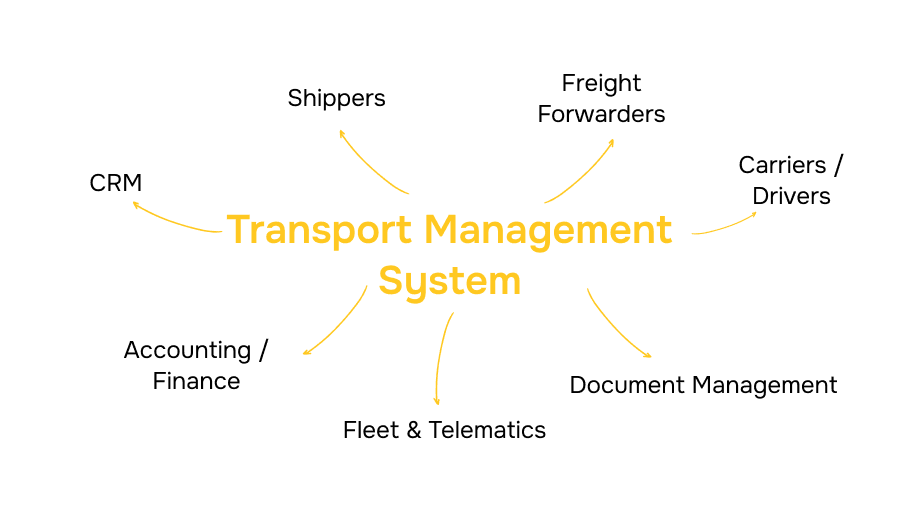
In this guide, we’ll show how Abyron helped a logistics client implement a comprehensive TMS, what challenges were overcome, and how your company can leverage similar solutions.
About the Project
Abyron developed a comprehensive Transport Management System (TMS) to optimize interactions between shippers, freight forwarders, and carriers in road freight transportation.
Our client is a large-scale logistics company managing a complex network of shipments and fleets across multiple regions. Before approaching us, they faced significant operational challenges, including delays in order processing, difficulties in coordinating multiple parties, and a lack of real-time visibility into fleet and document data.
We conducted numerous consultations and workshops with their team to fully understand their workflows, pain points, and strategic goals. These discussions helped us design a tailored solution that not only addresses immediate inefficiencies but also supports the company’s long-term growth.
The resulting platform integrates:
- Vehicle monitoring systems for real-time fleet tracking
- Chat functionality for seamless communication between drivers, shippers, and carriers
- Order processing automation to streamline workflow
- Electronic document management with intelligent document recognition
- Fuel and maintenance accounting
- Multi-level CRM integration
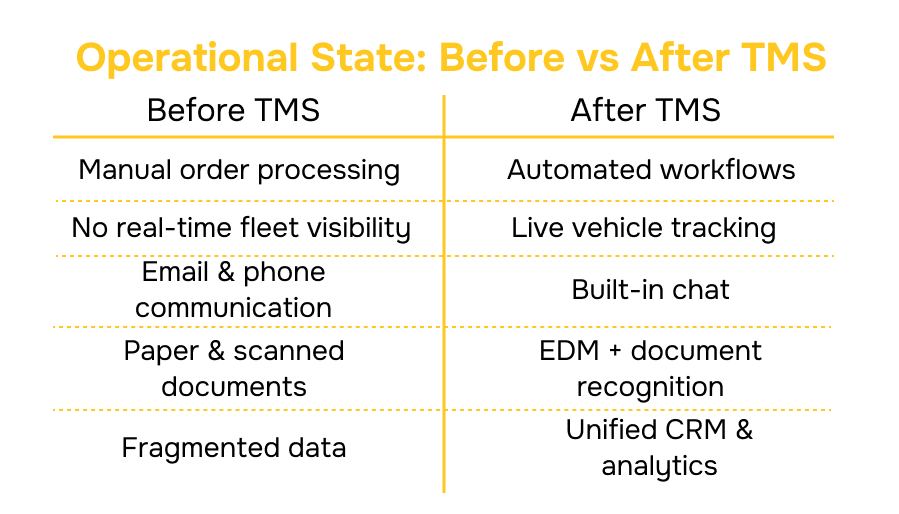
This system ensures end-to-end workflow optimization and enables managers to make fast, data-driven decisions, supporting the company’s scale and operational complexity.
Read more about the case here: System for Managing Logistics Processes
Other Abyron Experience in Logistics & Digital Operations
In addition to transport management systems, Abyron has delivered a range of complex digital solutions for logistics, transportation, and supply chain–driven industries. This experience allows us to apply best practices across different domains and design systems that scale reliably under high operational load.
Baggage Handling System for Airlines
Abyron developed a baggage handling management system for the aviation industry, designed to coordinate multiple operational teams and automate service requests.
The system focuses on:
- real-time processing of baggage-related incidents;
- automated service workflows integrated with CRM;
- tracking and prioritization of requests across airport departments;
- analytics and reporting for operational efficiency.
This project required high reliability, fault tolerance, and strict process automation, skills that directly translate to large-scale logistics and transport management systems where downtime and manual errors are unacceptable.
Supply Chain Simulation and Optimization Services
For supply chain–driven businesses, Abyron delivered simulation and optimization solutions that help companies model logistics scenarios before implementing them in real operations.
These services enable clients to:
- simulate demand fluctuations and transportation loads;
- test different routing and fleet utilization strategies;
- predict bottlenecks and cost drivers;
- make data-driven decisions using scenario-based modeling.
This experience strengthens our ability to design TMS platforms that are not only operational tools but also strategic decision-support systems.
Insights on AI and ERP in Logistics
Abyron also shares practical expertise through analytical articles, including Insights on AI and ERP in Logistics, where we explore how modern logistics companies leverage:
- AI-powered forecasting and predictive analytics;
- intelligent document recognition and automation;
- ERP and CRM integrations as a single operational backbone;
- data unification for finance, operations, and customer management.
These insights reflect real-world projects and challenges we encounter when building enterprise-grade logistics platforms, helping clients better understand how technology can drive efficiency, transparency, and long-term growth.
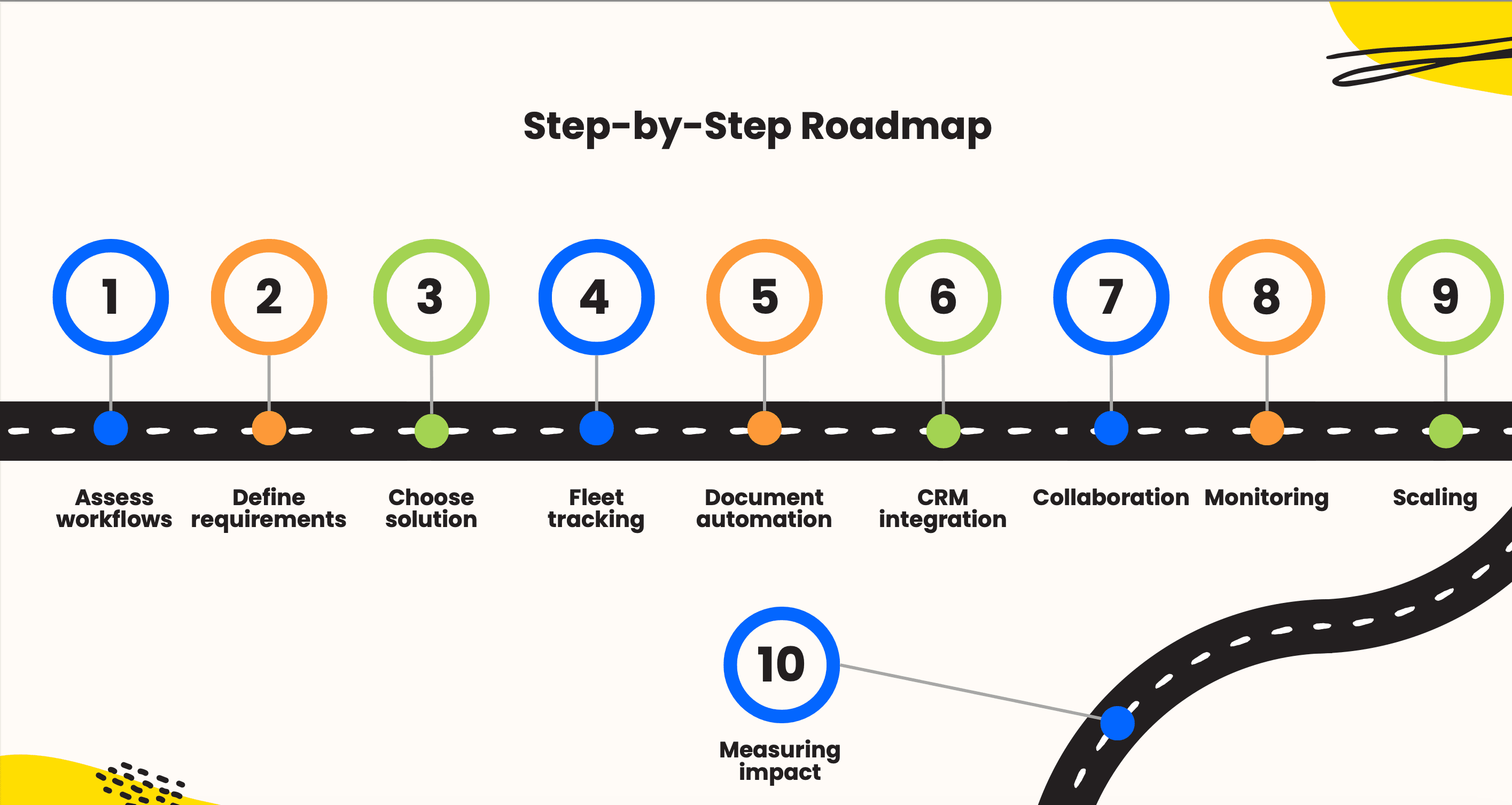
Step-by-Step Guide: How to Optimize Logistics with a TMS
Step 1: Assess Current Workflows and Identify Bottlenecks
Before implementing a TMS, you must thoroughly understand your existing operations. Key steps:
- Map all logistics processes: order placement, dispatching, fleet allocation, document flow, and billing.
- Identify delays in order processing automation and manual handling of documents.
- Evaluate communication between shippers, freight forwarders, carriers, and internal teams.
- Determine technology adoption readiness: according to Tech.co 2025, 78% of logistics companies trust technology to support core operations.
Tip: Use surveys or interviews with employees to uncover hidden inefficiencies.
Step 2: Define System Requirements
Your TMS must meet your company’s specific operational needs. Include:
- Real-time vehicle tracking: Ensure managers and dispatchers have live updates on fleet movements. -** Order processing automation**: Automate tasks like order approval, invoicing, and status updates.
- Electronic document management (EDM): Implement automated document recognition for invoices, delivery notes, and contracts.
- CRM integration: Track customer interactions, financial flows, and logistics KPIs in one system.
- Fuel and maintenance accounting: Monitor expenses and schedule preventive maintenance.
- Remote collaboration tools: Facilitate communication between drivers, dispatchers, and external partners.
- Tender and procurement module: Allow open tendering to select the best carriers efficiently.
Reference: See Abyron’s System for Managing Logistics Processes for a practical implementation example.
Step 3: Choose Between Custom and Ready-Made Solutions
Depending on your business model and growth strategy, you can choose:
- Custom TMS Development: Ideal for complex operations requiring deep integration with existing systems. Allows full workflow automation and CRM integration services tailored to your company.
- Ready-Made Platforms: Solutions like SAP, Oracle, or Zoho may suffice for simpler operations but often require customization for multi-party coordination.
Tip: Abyron’s expertise in outsourcing vs outstaffing allows you to scale TMS development efficiently with dedicated developers.
Step 4: Integrate Fleet Monitoring and Vehicle Tracking
A key part of TMS is real-time vehicle tracking. Steps to implement: 92. Install GPS trackers or integrate with existing telematics systems. 93. Set up a transport management system dashboard for live fleet monitoring. 94. Track fuel consumption, mileage, and maintenance schedules. 95. Use predictive analytics to anticipate vehicle downtime and reduce delays.
Statistic: Fleets with 21-50 vehicles are most likely to adopt management software, with 33% already using these technologies.
Step 5: Automate Order Processing and Document Management
Manual handling of documents causes delays and errors. Abyron recommends: Implement electronic document management systems that store all invoices, delivery notes, and contracts in one place. Enable intelligent document recognition software to extract data from scanned documents automatically. Integrate order processing automation to handle approvals, updates, and billing without manual intervention. Reference Cases: Baggage Handling System - automated service requests with CRM integration. Supply Chain Simulation and Optimization - predictive modeling for order planning.
Step 6: Implement CRM Integration
Integrating TMS with CRM provides a single source of truth for customer interactions and operational data:
- Track orders, shipments, and service requests in real-time.
- Automate notifications to customers or partners.
- Monitor revenue, profitability, and logistics KPIs in one place.
- Ensure multi-level access for employees depending on their roles.
Tip: This integration reduces duplicated work and accelerates workflow optimization, as seen in Abyron’s logistics and airline projects.
Step 7: Enhance Collaboration with Remote Teams
Logistics often involves multiple stakeholders across different locations. Abyron recommends:
- Implement chat and collaboration tools within the TMS for instant communication.
- Enable access for drivers, dispatchers, and freight forwarders on mobile devices.
- Reduce dependency on emails or phone calls, accelerating sales order processing automation.
Step 8: Monitor Performance and Optimize
Once your TMS is live:
- Track KPIs such as order processing speed, fleet utilization, and delivery accuracy.
- Analyze trends to identify bottlenecks or cost inefficiencies.
- Adjust workflows, update automated processes, and enhance document handling rules.
- Use predictive analytics to plan future fleet needs and optimize routes.
Statistic: Vehicle maintenance systems are consistently a priority for companies adopting new technology.
Step 9: Scale with Outstaffing or Outsourcing
For companies aiming to scale operations or implement TMS quickly: Outstaffing: Embed dedicated Abyron developers into your team for TMS and CRM enhancements. Outsourcing: Let Abyron deliver a full end-to-end solution, from requirements to deployment and support.
Reference: Outsourcing vs Outstaffing: How to Choose
Step 10: Measure Impact
A properly implemented TMS delivers measurable benefits:
- Faster order processing and reduced manual errors
- Optimized employee workflows and remote collaboration
- Real-time tracking and monitoring of vehicles and documents
- Improved decision-making based on data
- Increased profitability and operational efficiency
Conclusion
A modern transport management system is critical for logistics companies looking to improve efficiency, automate workflows, and increase profitability. Abyron’s expertise in custom TMS development, workflow automation, and CRM integration helps clients transform their operations, from fleet tracking to predictive supply chain analytics.
Start your logistics transformation today. Contact us via the form on our website to discuss your project: Get in Touch
Read the full Abyron case: System for Managing Logistics Processes
Frequently Asked Questions
Q1: What is a transport management system? A1: A TMS manages logistics processes, including shipment planning, fleet tracking, order automation, and document management.
Q2: What is the benefit of a transport management system dashboard? A2: Provides real-time visibility into fleet operations, order status, and financial metrics.
Q3: What is electronic document management? A3: A system that automates document handling, stores files securely, and integrates intelligent document recognition for faster processing.
Q4: How does CRM integration help logistics companies? A4: Unifies operational and customer data, automates notifications, and improves reporting for better decision-making.
Q5: How can outsourcing or outstaffing help implement a TMS? A5: Access to expert developers ensures efficient, scalable implementation without straining internal resources.



CONTACT US