
NEWS
Outsourcing vs Outstaffing: How to Choose the Right Model to Reduce Software Development Costs
NEWS
Outsourcing vs Outstaffing: How to Choose the Right Model to Reduce Software Development Costs

10.19.2025
According to recent surveys, companies launch an average of 5–10 new digital initiatives per year, and this number continues to rise. However, hiring and maintaining a full in-house development team for every new project is often costly and time-consuming. That’s why many turn to flexible collaboration models like outsourcing and outstaffing — to scale faster, access top talent, and stay focused on what truly drives growth.
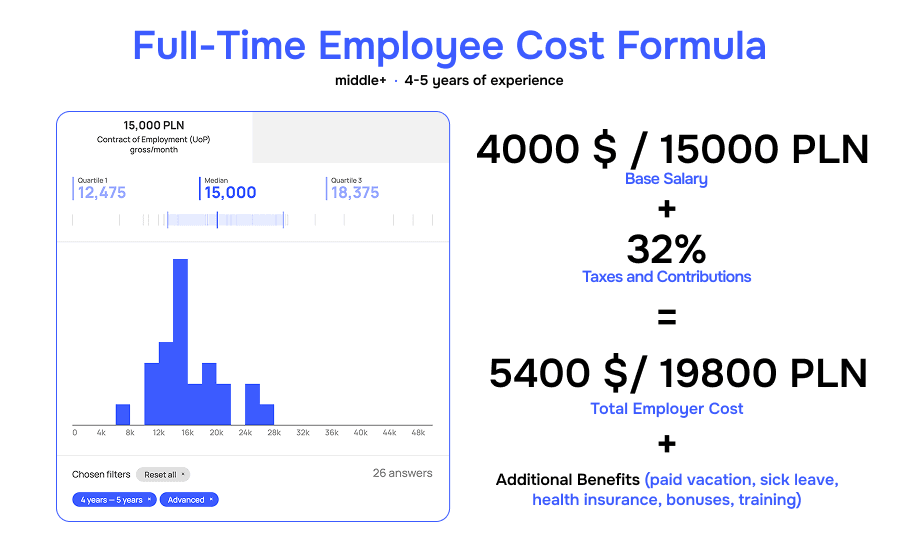
To understand the financial impact, let’s make it more concrete. Imagine you need a mid-level developer with 4–5 years of experience. How much would it actually cost to hire them as a full-time employee?
A typical monthly salary for such a developer is around $4,000. On top of that, the company needs to pay roughly 30% in taxes and cover additional expenses such as paid sick leave, vacation, health insurance, and other benefits.
Here’s a clear representation of how a company calculates the total cost of a full-time employee, including all these factors:
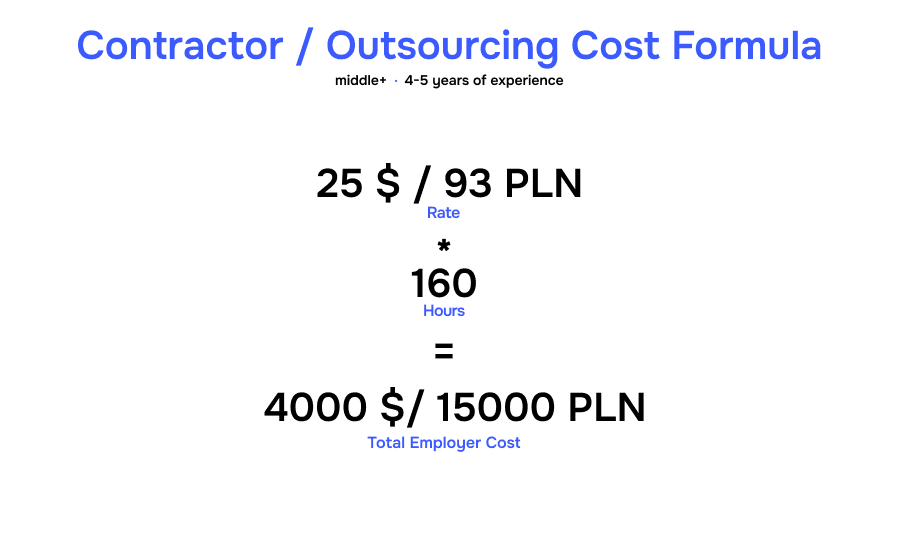
Next, let’s look at the cost of hiring a developer through outstaffing. In this model, you pay only for the hours your developer works. There are no additional expenses for paid leave, vacations, health insurance, or other benefits.
The difference compared to a full-time in-house employee becomes immediately clear when you see the two models side by side:
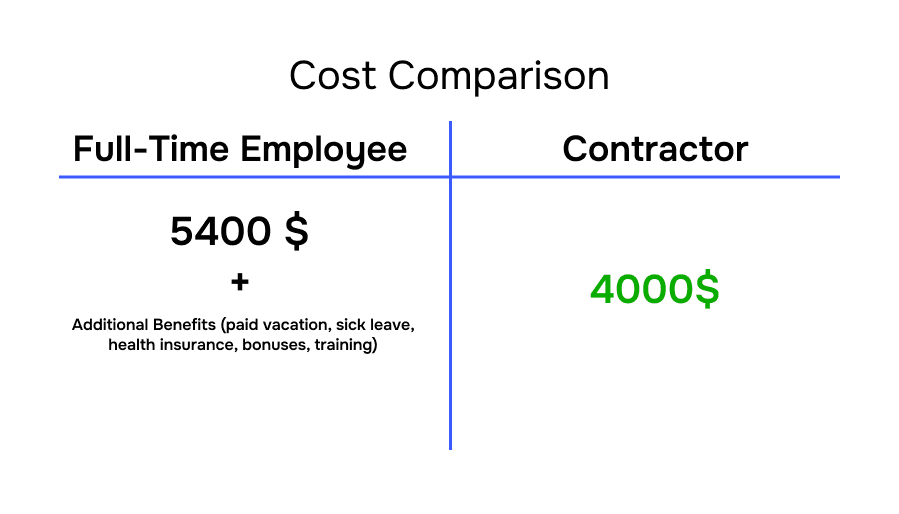
Finally, the difference becomes evident when we put the two models side by side. The comparison chart below illustrates that, in many cases, outstaffing can be significantly more cost-efficient than maintaining a full in-house team:
Global spending on outsourcing and outstaffing is projected to reach $936.6 billion by 2027, growing at an annual rate of 7.7%. This shows that companies are increasingly adopting smarter, more flexible ways to build and evolve their IT solutions for startups and enterprises alike.
The market is growing fast — don’t fall behind. Fill out a short form to discuss how outsourcing or outstaffing can accelerate your business growth.
With so many projects and ideas emerging, the main question becomes: which approach is the right fit for your business?
In this article, we’ll take a closer look at both outsourcing and outstaffing so you can understand their differences, evaluate their benefits, and decide which solution best aligns with your company’s needs.
What Is Outsourcing?
Outsourcing means delegating specific tasks or entire projects to an external company that takes full responsibility for delivery. This approach works best when a business wants to get a product or service “ready-made” without managing the development process internally. For example, startups often choose outsourcing software development to build a product from scratch, while focusing their internal resources on marketing or fundraising. The external team handles everything — planning, design, coding, testing, and support.
✅ Best for:
- Companies without in-house tech expertise
- Businesses that want quick delivery with minimal internal involvement
- Projects with clearly defined scope and deadlines
⚠️ Potential drawbacks:
- Limited control over daily processes
- Dependency on the vendor’s communication and quality standards
💡 In short: outsourcing is about trusting another company to deliver a finished solution.

What Is Outstaffing?
Outstaffing, on the other hand, means extending your existing team with external specialists provided by a staff augmentation services company. These professionals work under your management, follow your processes, and use your tools — just like your in-house employees, but without the overhead of full-time hiring.
For instance, if you need an additional frontend developer for six months to support your product launch, you can bring one in through IT outstaffing services.
✅ Best for:
- Businesses with strong in-house management
- Long-term projects requiring flexible scaling
- Teams that need specific expertise temporarily
⚠️ Potential drawbacks:
- Requires internal coordination and supervision
- Shared responsibility for results
💡 In short: outstaffing is about hiring external professionals who become part of your existing team.
For a deeper dive into why this model is particularly beneficial for startups and scale-ups, check out our article: 7 Reasons Outstaffing Is a Game-Changer for Startups/Scale-ups
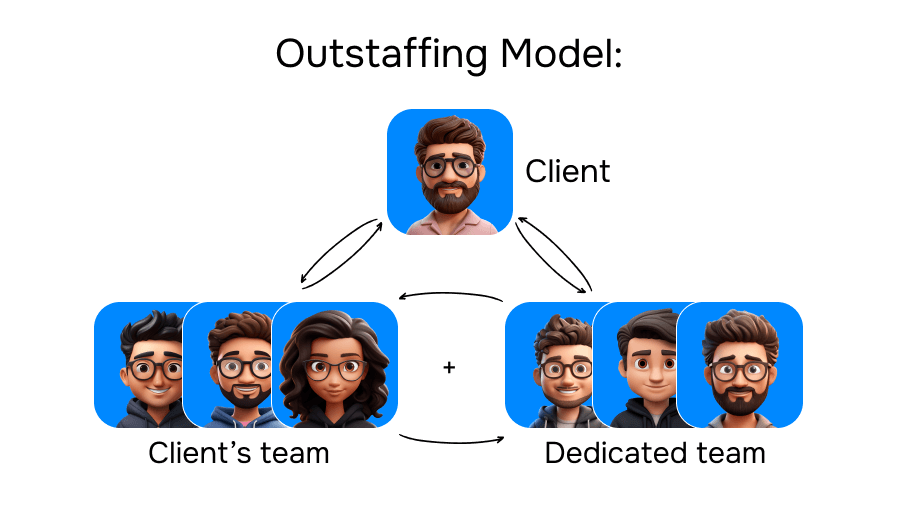
The difference becomes immediately clear when you see the two models side by side: outsourcing vs outstaffing. It shows how each model affects cost, control, flexibility, and the level of involvement required from your team, helping you decide which approach best fits your business needs.
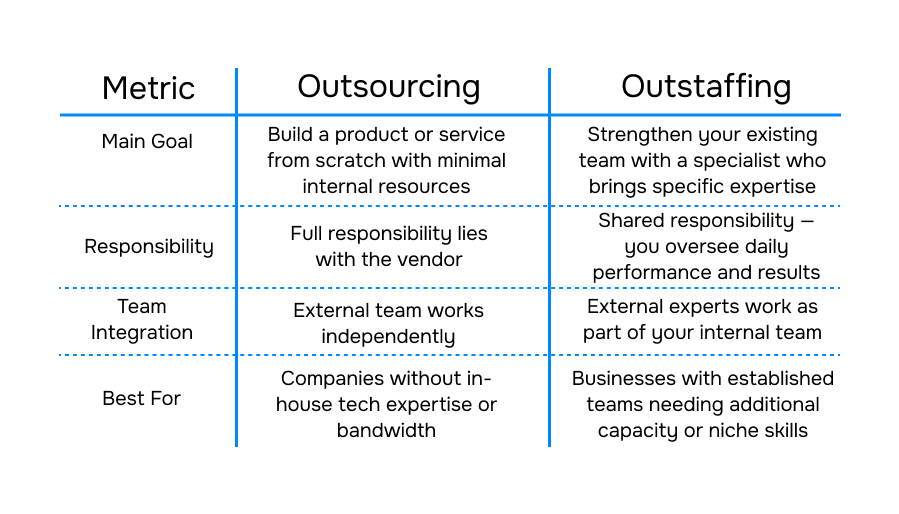
Choosing between outsourcing and outstaffing is not just about cost — it’s about strategy. If your goal is to reduce software development costs and scale quickly with minimal involvement, outsourcing is ideal.
Conclusion
But if you already have an internal team and need to add skilled developers or engineers without long-term commitments, outstaffing gives you control, flexibility, and seamless integration.
To see how these models could work for your specific projects and get a personalized recommendation, fill out our short form and our team will help you find the most efficient approach for your business.
FAQ: Outsourcing vs Outstaffing
1. What is outstaffing?
Outstaffing is a collaboration model where external specialists work as part of your internal team but are officially employed by another company. It helps businesses access skilled developers quickly and cost-effectively without long-term hiring commitments. To learn more about why this model is especially effective for startups and scale-ups, check out our detailed article: 7 Reasons Outstaffing Is a Game-Changer for Startups/Scale-ups.
2. How to choose the best outsourcing software development company for your project?
Look for a company with proven experience in your domain, transparent communication, and case studies. The best outsourcing software development for startups providers combine technical expertise with an understanding of your business goals.
At Abyron, we follow exactly this approach — providing tailored IT solutions for startups and scale-ups, with a focus on long-term value, flexibility, and measurable results.
3. How to hire remote developers efficiently?
You can partner with a staff augmentation services company or IT outstaffing provider to hire remote developers who meet your project’s specific technical and cultural needs. This approach ensures fast onboarding, access to top talent, and minimal administrative overhead.
4. Which is the best example of outsourcing?
When a startup wants to reduce costs while ensuring high-quality delivery, outsourcing can be the ideal solution. By partnering with an experienced external team, startups can focus on their core business activities while leaving the technical development to experts. For example, in our Business Card and Ordering Platform case study, we helped a client launch a full-featured digital product from scratch — including user-friendly design, seamless ordering functionality, and backend integration — all delivered on time and within budget. This allowed the client to scale their operations quickly without the overhead of hiring a full in-house team.



CONTACT US