
NEWS
From Manual to Automated: How AI Improves European Logistics Management and Supply Chain Modeling
NEWS
From Manual to Automated: How AI Improves European Logistics Management and Supply Chain Modeling
9.27.2025
The European logistics sector is experiencing rapid growth and change. Global trade flows, the growth of e-commerce, and increasing customer expectations are putting constant pressure on logistics companies to deliver faster and more reliably. Competition in the market is also growing. With more players entering, differentiation is no longer about price alone — it is about service quality, efficiency, and the ability to adapt quickly. Customers expect real-time visibility, seamless communication, and data-driven decision making. Key trends in 2025 include a greater focus on automation, increasing reliance on data-driven decision-making, and the growing importance of Eastern European logistics hubs.
Traditional processes can no longer keep pace. With delays, errors, and missed opportunities becoming the norm, companies are asking: how can we stay ahead? The answer is automation and digital solutions that improve efficiency, visibility, and responsiveness—creating a decisive competitive edge.
How to Optimize Logistics in 3 Steps
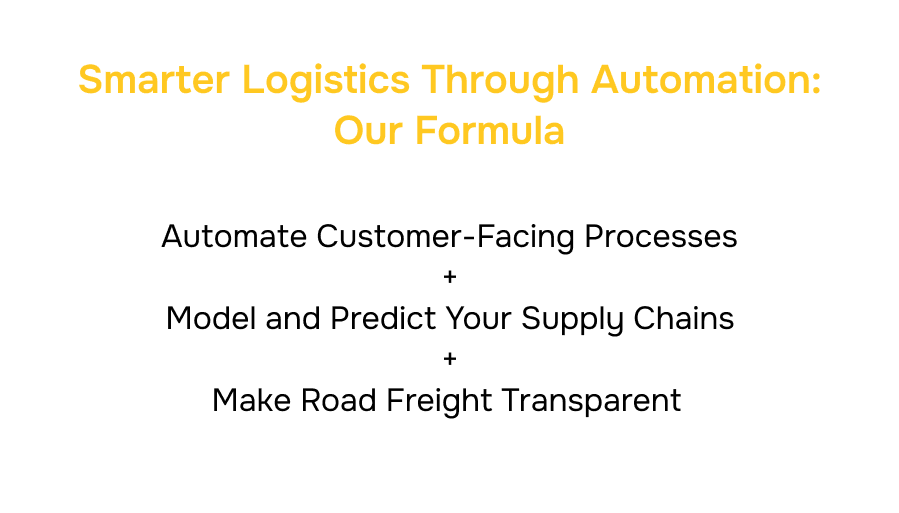
Thanks to our experience with key logistics clients, we have developed an ideal formula for logistics automation — a carefully balanced combination of process analysis, digital tools, real-time data integration and digital logistics solutions that streamline operations and reduce errors. This approach transforms the way companies handle logistics by cutting order processing times from hours to minutes, eliminating invoice and shipment errors, and enabling managers to make faster, data-driven decisions using real-time dashboards.
1. Automate Customer-Facing Processes
In today’s logistics market, customer expectations are higher than ever. Travelers and clients demand speed, accuracy, and convenience. Manual operations—like processing bookings, check-ins, or payments—can be slow, error-prone, and resource-intensive.
- Step 1: Identify repetitive tasks in your customer workflow. Look for points where manual data entry, phone calls, or email confirmations are slowing the process.
- Step 2: Implement digital tools that automate these tasks. For example, a web application can allow customers to place orders, calculate costs in real time, and integrate seamlessly with your CRM and payment systems — a key component of modern E-commerce logistics solutions.
- Step 3: Monitor and refine the workflow. Automation is most effective when it reduces bottlenecks without compromising service quality. Collect feedback from staff and clients to identify recurring issues, validate process improvements, and continuously enhance workflow efficiency and customer experience.
Outcome: Automation reduces operational load, speeds up service, and enhances customer satisfaction. Our formula adapts to diverse needs while maintaining speed and reliability. 👉 See our baggage automation case here
2. Model and Predict Your Supply Chains
Supply chains can be increasingly complex, with multiple transport modes, interdependent routes, and variable costs. Traditional manual planning cannot keep up with this complexity.
- Step 1: Map your entire supply chain using specialized data visualization tools and logistics management systems. Document all routes, delivery conditions, modes of transport, and interdependencies. A clear visualization serves as the foundation for analysis and optimization.
- Step 2: Introduce predictive modeling tools. These systems can simulate scenarios, forecast costs, and identify potential bottlenecks before they occur. Use AI or rule-based engines to process large amounts of data quickly.
- Step 3: Make data-driven decisions. By predicting the impact of changes in routes, volumes, or transport methods, you can proactively reduce costs, optimize resource allocation, and improve delivery reliability.
Outcome: Predictive supply chain modeling speeds up decision-making, reduces waste, and empowers employees to focus on strategic tasks. Our approach is designed to handle even the most complex networks efficiently. 👉 Explore our supply chain optimization case here
3. Create Transparency in Road Freight Operations
Road freight operations often suffer from fragmented processes, paper-based documentation, and a lack of real-time data, which can lead to delays, errors, and miscommunication. Effective communication and operational visibility are essential to address these challenges, ensuring that shippers, carriers, and freight forwarders can coordinate efficiently. By implementing integrated systems and clear workflows, companies can streamline interactions, reduce errors, and keep costs under control.
- Step 1: Evaluate all interactions between stakeholders. Identify where delays, errors, or duplicate work occur.
- Step 2: Implement a transport management system (TMS) that integrates real-time vehicle tracking, electronic document handling, and multi-level access for all parties. Include features like chat, fuel and maintenance tracking, and automated order processing.
- Step 3: Train your team and partners to use the system effectively. Transparency works only if all participants can access the right information at the right time.
Outcome: A fully integrated TMS establishes a seamless cycle of interaction, improves employee efficiency, enables faster management decisions, and ultimately increases profitability. By applying our automation formula, companies achieve maximum operational efficiency. 👉 Discover our TMS solution case here
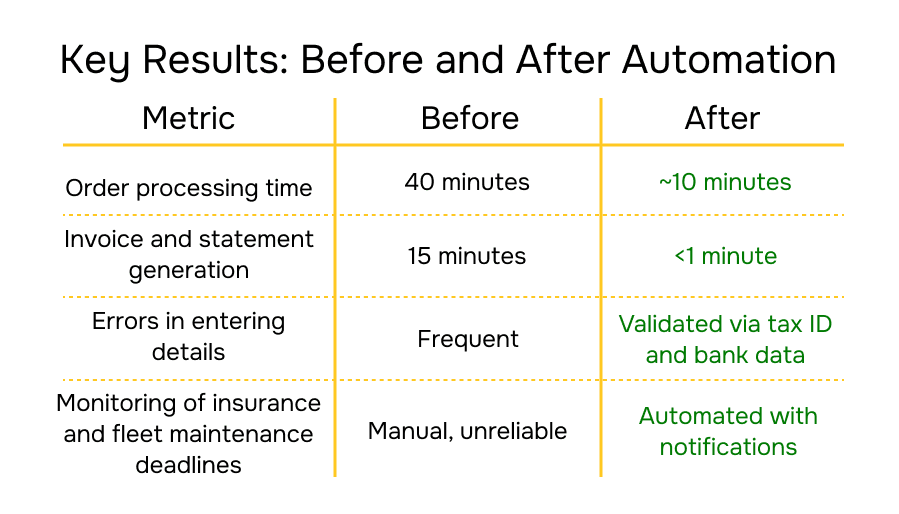
By applying this formula, businesses have achieved remarkable results:
- order processing time was reduced from 40 minutes to just ~10 minutes,
- invoice and statement generation now takes less than 1 minute instead of 15,
- errors in entering details were eliminated through tax ID and banking data validation.
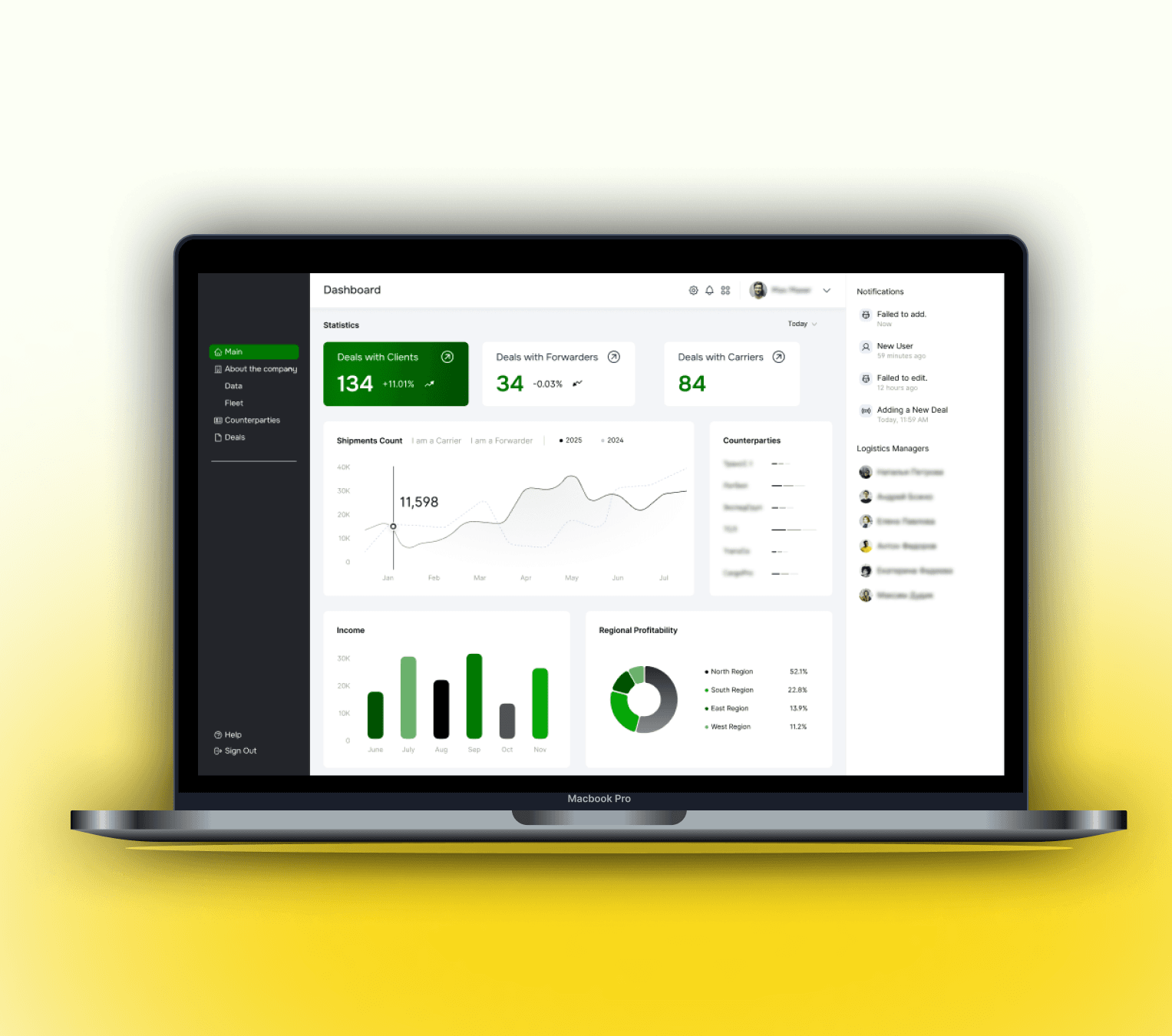
The system also enables automatic monitoring of insurance and maintenance deadlines for the fleet, ensuring compliance and reducing risk. These improvements lead to faster ROI, with clients recouping their investments in just 6 months. A central dashboard interface gives managers real-time visibility into all operations, from orders to fleet status, making it easy to track performance and act on insights instantly.
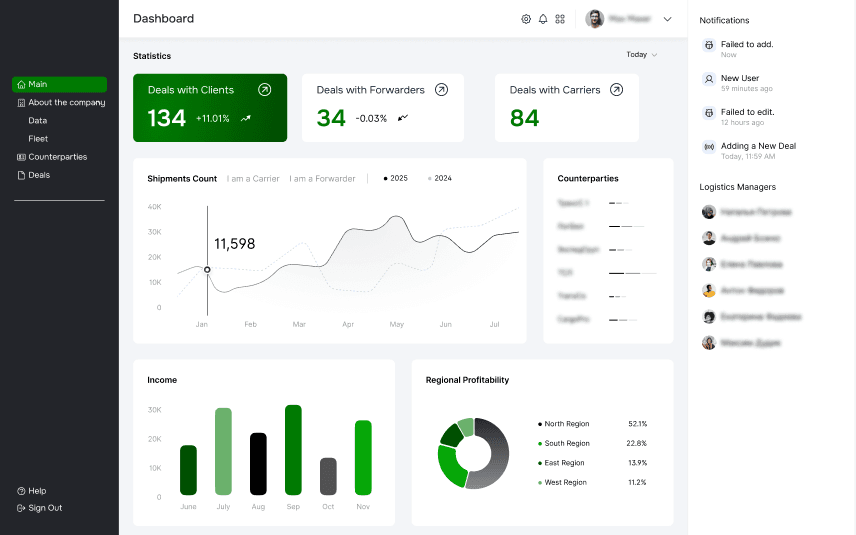
Overall, the formula allows businesses to cut operational costs, increase productivity, and deliver a smoother, more reliable experience to their clients—turning complex, time-consuming processes into clear competitive advantages.
Conclusion
The European logistics market in 2025 faces a complex mix of challenges: shifting trade routes, rising shipping costs, and a volatile trade environment. Companies must navigate these headwinds while protecting their economic interests with a multipronged strategy focused on business, technology, and sustainability.
By applying proven automation strategies, businesses can optimize manual workflows, reduce processing times, eliminate errors, and gain real-time visibility into operations, ultimately accelerating ROI and minimizing operational risks. The future of logistics also demands resilience and adaptability: diversifying supply chains, leveraging strategically located warehouses, and integrating AI and real-time data analytics allow companies to respond quickly to market disruptions and rising customer expectations. For more insights on how AI can enhance business processes, visit Artificial Intelligence technology to improve business processes.
Get started now: receive our full report on the future of global logistics networks, request a personalized audit of your processes, or get expert recommendations on implementing automation and AI solutions — simply fill out the form, and our team will get in touch with you. For a real-world example, see how we optimized a baggage handling system here.
FAQ: Key Questions on Logistics and Supply Chain Optimization
Q1: What is logistics management?
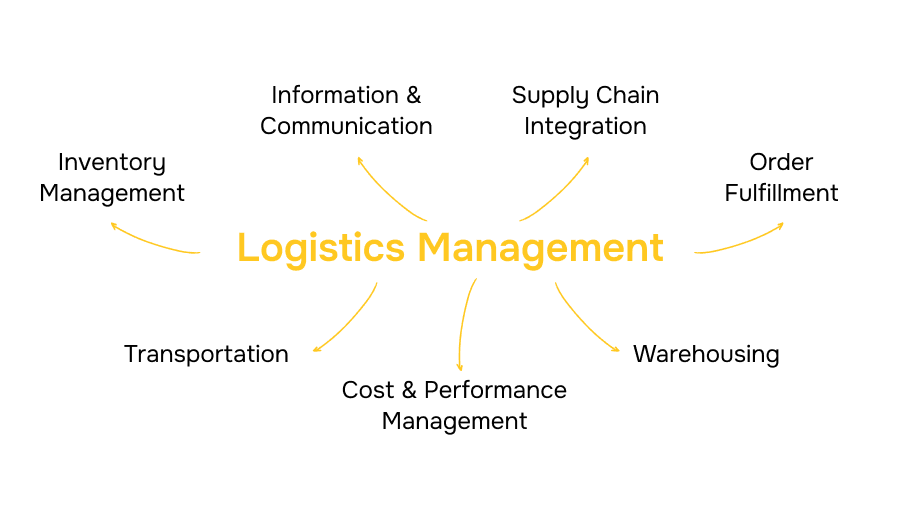
Logistics management involves planning, implementing, and controlling the efficient flow of goods, services, and information from the point of origin to the point of consumption. It ensures that products reach customers on time, in good condition, and at the lowest possible cost, while coordinating transportation, warehousing, inventory, and communication processes.
Q2: What is supply chain optimization?
Supply chain optimization is the process of improving the efficiency and effectiveness of a supply chain. It involves analyzing routes, transport modes, inventory levels, and supplier performance to reduce costs, minimize delays, and improve overall operational performance. Predictive modeling and data-driven decision-making are often used to anticipate risks and optimize workflows.
Q3: What are the advantages of AI in logistics?
Artificial Intelligence (AI) brings multiple advantages to logistics by transforming how companies process data, plan, and respond to market challenges. The key benefits include:
- Enriched Data Quality – AI technologies like Natural Language Processing (NLP) and Machine Learning (ML) help collect, structure, and interpret massive volumes of information. This improves accuracy, reduces risks, and ensures optimal allocation of people and assets.
- Improved Predictive Analytics – AI in logistics and transportation can anticipate demand fluctuations, detect risks, and optimize routes by analyzing both internal and external data. For example, DHL uses AI to monitor millions of online posts to detect potential supply chain disruptions early.
- Better Logistics Forecasting – AI-driven tools can forecast demand and resource needs up to 12 weeks in advance. This allows companies to route vehicles more efficiently, optimize shipping capacity, and avoid bottlenecks at ports or warehouses. Together, these benefits help logistics companies cut costs, improve reliability, and gain a strong competitive edge in a rapidly changing global market.
Q4: How much does supply chain management software cost?
The cost of supply chain management software depends on the scope of work, the size of your operations, and the level of customization required. To get an accurate estimate tailored to your business, please fill out the form, and our team will contact you to provide a personalized quote.




CONTACT US